Electrolysis
Electrolysis in Saltwater: Why Your Boat’s Metal is Disappearing
Understanding the silent killer of props, shafts, and through-hulls
So you’re standing on the dock with your buddy, beer in hand, and he pulls his boat out for the season. The prop looks like Swiss cheese, the shaft’s got more pits than the Atlanta bypass, and those bronze through-hulls? They’re turning into powder. “What the hell happened?” he asks. Well, my friend, you’re looking at electrolysis—and it’s been eating his boat alive all season long.
Let’s talk about what’s really going on down there in the water, why it matters, and how you can keep your rig from turning into an expensive science experiment.
What is Electrolysis? (The Simple Version)
Here’s the deal: electrolysis is basically your boat’s metals getting eaten away by electrical current flowing through the saltwater. Think of it like rust on steroids, except instead of just oxygen doing the dirty work, you’ve got electricity turbocharging the whole process.
In the simplest terms, when different metals are hanging out in saltwater (which is a pretty decent conductor, by the way), and there’s any kind of electrical current involved—whether it’s from your boat’s shore power, a funky ground, or even just the natural differences between metals—electrons start flowing. And when electrons flow through saltwater between metals, you get galvanic corrosion on one end and electrolytic corrosion on the other. Your prop, shaft, and underwater hardware? They’re paying the price.
Real talk: I’ve seen brand new props turn into junk in less than a season because of bad shore power grounds. It’s not just old boats—this can happen to anybody who’s plugged into the dock.
Why does this happen? Well, saltwater is basically nature’s battery electrolyte. Add in different types of metals (bronze props, stainless shafts, aluminum outdrives), throw in some stray electrical current from shore power or a bonding system that’s not quite right, and boom—you’ve got yourself an underwater battery. Except instead of powering your fishfinder, it’s dissolving your hardware.
How does it actually work? When electrical current flows through saltwater from one piece of metal to another, ions in the water strip atoms away from the metal on one end (the anode, or the metal getting eaten). Those metal atoms dissolve into the water, leaving behind pits, holes, and eventually structural failure. Meanwhile, the other metal (the cathode) is usually fine—it’s actually being protected. The problem is, the weakest metal gets sacrificed unless you set things up right.
Want to Dive Deeper?
Metals Without Protection: A Losing Battle
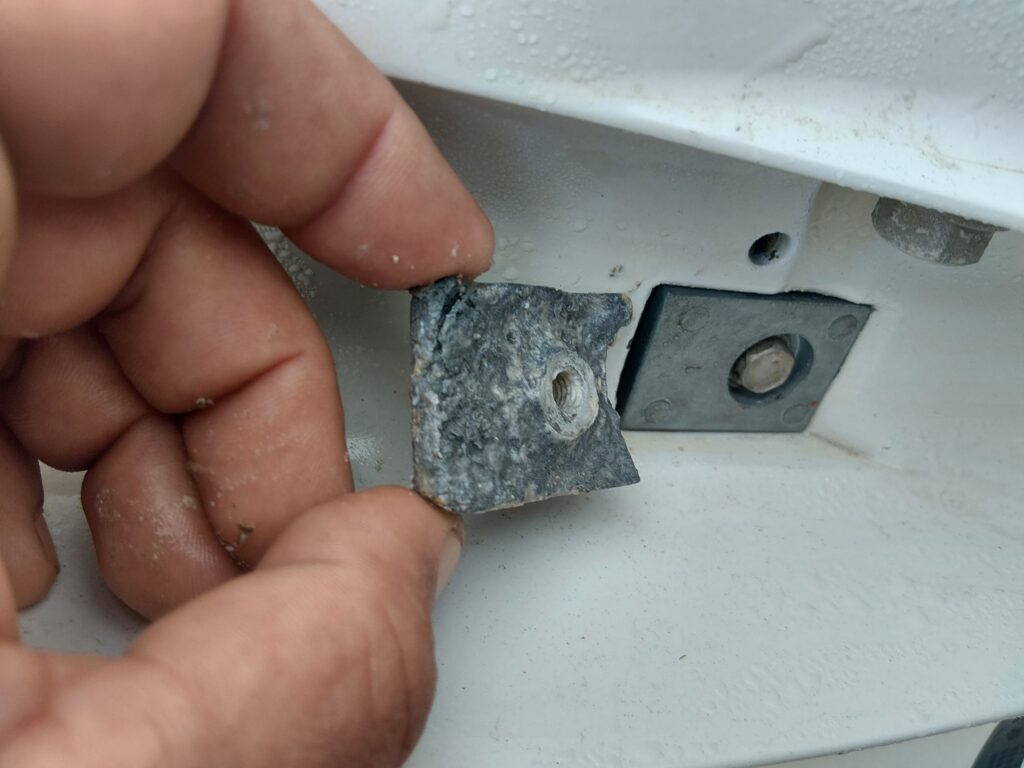
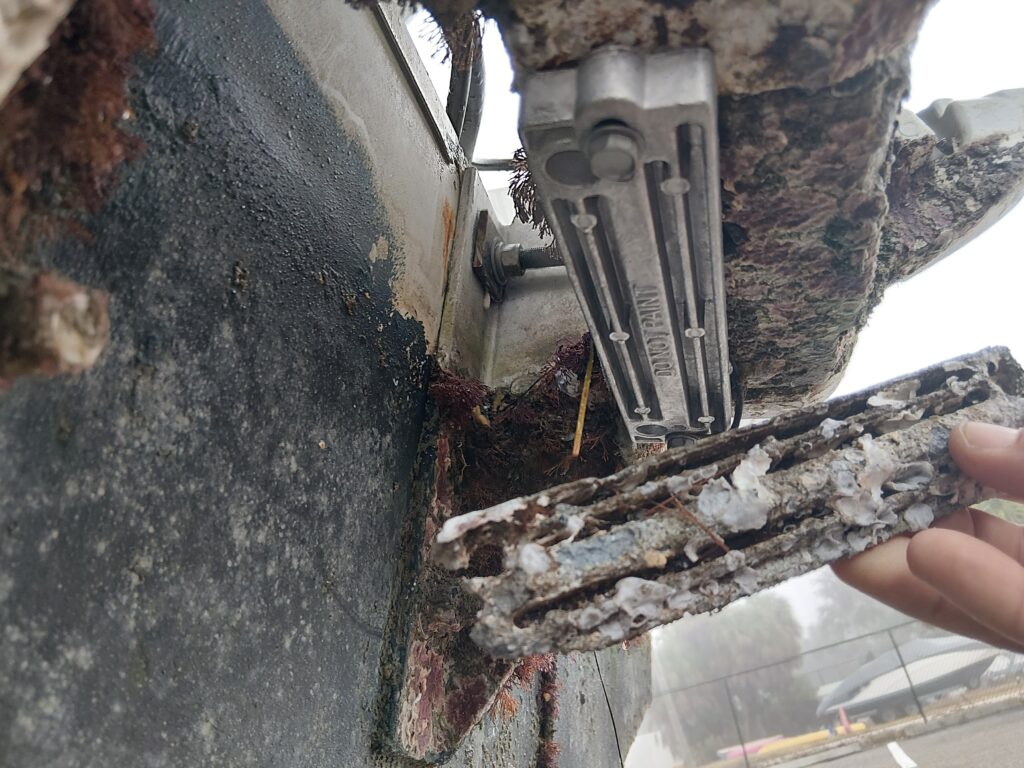
Now imagine you’ve got no sacrificial anodes on your rig. Maybe they fell off, maybe you never had ’em, or maybe they’re so crusted over with barnacles they stopped working. What happens?
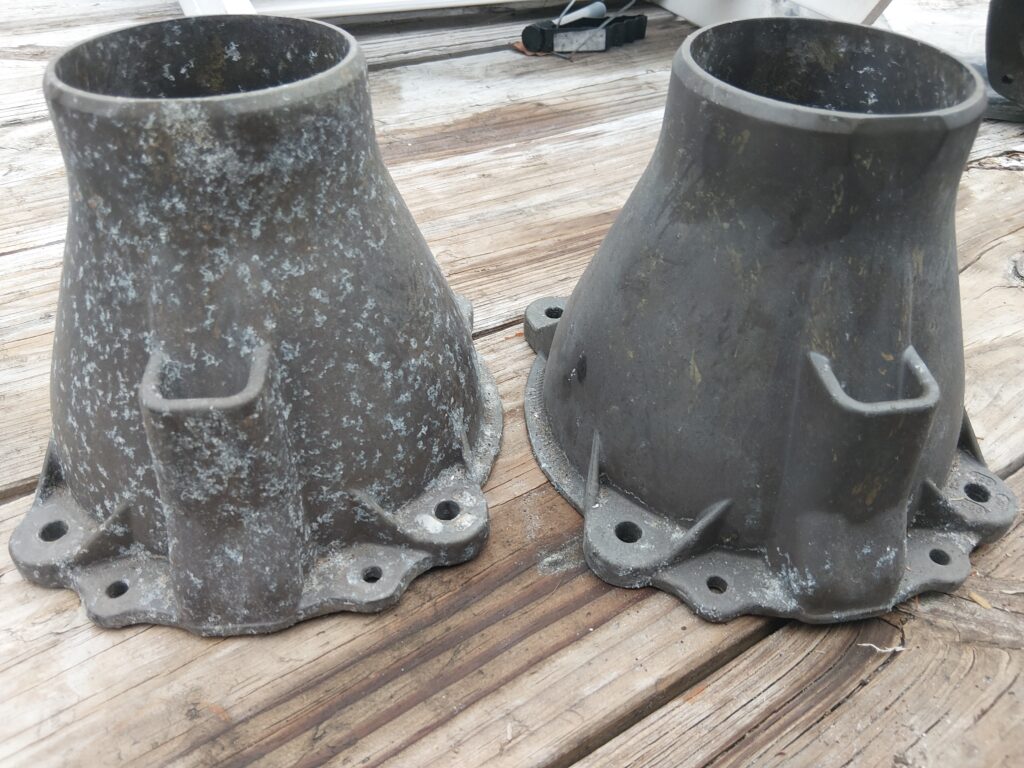
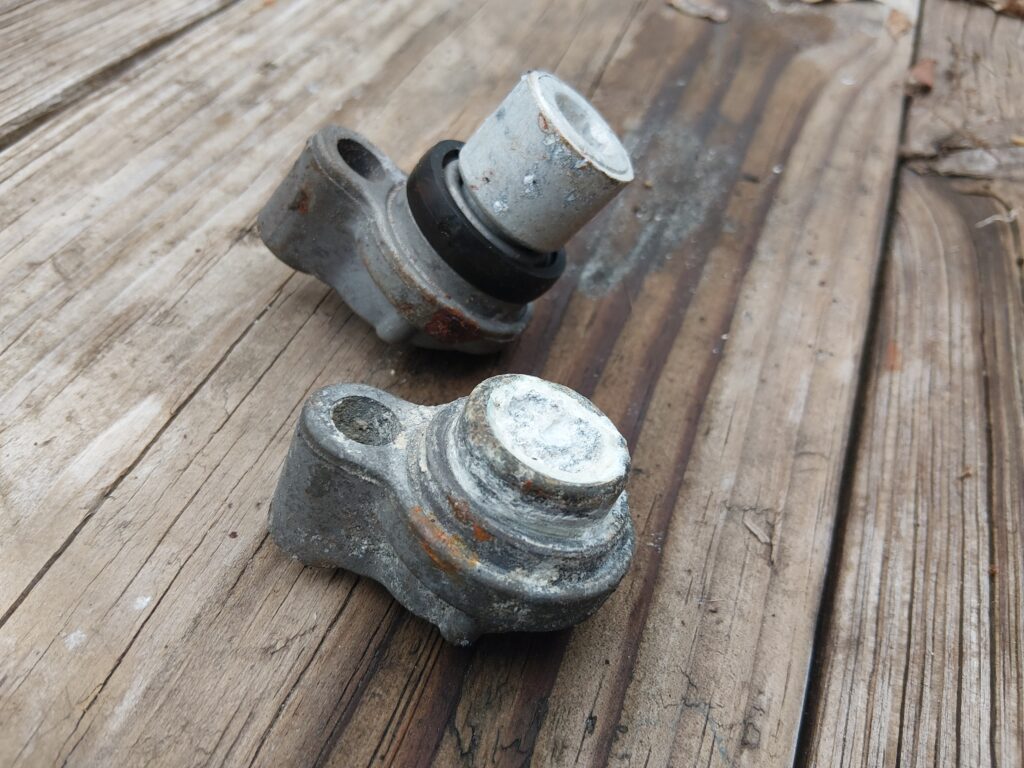
What you’ll see: Your expensive bronze through-hulls start developing that pink dezincification look—that’s the zinc literally being pulled out of the bronze alloy, leaving behind weak, porous copper. Props develop deep pitting that looks like somebody took a ball-peen hammer to them. Trim tabs get paper-thin. Shafts start looking like the surface of the moon. And if you’ve got an aluminum outdrive? Brother, you’re in for a world of hurt.
I knew a guy who kept his boat at a marina with sketchy shore power. No zincs, no bonding system. He pulled his outdrive after six months and could literally poke his finger through the housing. Cost him eight grand to replace. Eight grand. For a twenty-five cent electrical problem.
Why it’s such a problem: Without protection, whichever metal is most electronegative (usually aluminum, then zinc, then bronze/brass, then stainless) becomes the sacrificial lamb. And here’s the kicker—it’s not gradual. Electrolysis is fast. We’re not talking about rust developing over years; we’re talking about serious damage in months, sometimes weeks if conditions are right. You’ll lose structural integrity, develop leaks, and potentially face catastrophic failure of critical components like rudders or through-hulls.
How it gets out of hand: The thing about electrolysis is it’s sneaky. Most of the damage happens underwater where you can’t see it. By the time you notice something’s wrong—maybe your steering feels loose, or you spot a drip at a through-hull—you’ve already got significant corrosion. Pull the boat, and surprise! Everything below the waterline looks like it went through a war. That’s the real danger of running without proper protection.
Bonding Systems: Your Boat’s Insurance Policy
Alright, so how do you stop this madness? Enter the bonding system—basically a planned electrical connection between all your underwater metals, tied together with a wire and protected by sacrificial anodes.
What is a bonding system? Think of it as linking all your underwater metal parts together into one big happy family. You run a wire (usually tinned copper) connecting your shaft, through-hulls, rudder, trim tabs—everything metallic below the waterline. Then you attach sacrificial zinc anodes to that same wire. Now all those metals are at the same electrical potential, which means no current flows between them, and the zincs take the hit instead of your expensive hardware.
Why bonding works so well: By electrically connecting everything, you eliminate the voltage differences that drive electrolysis. And by adding sacrificial anodes to the system, you give the current something cheap to eat instead of your props and shafts. Zincs are more electronegative than anything else on your boat, so they corrode first and protect everything else. It’s like hiring a bodyguard for your underwater gear—the zinc takes the bullet.
Here’s a Florida truth: zincs are cheap. A few zincs might run you fifty, maybe a hundred bucks depending on your setup. A new prop? That’s $600 easy. New through-hulls? Add another few hundred plus haulout and labor. Do the math. Zincs are the best investment you’ll make.
How to set up a proper bonding system: You’ll want to hire a marine electrician if you’re not comfortable with electrical work, but the basics are pretty straightforward. Run a heavy-gauge tinned copper wire connecting all your underwater metals—use proper marine-grade crimps or bolts to make solid connections. Make sure the bonding wire ties into your DC negative ground system at a single point (usually at the engine block or main DC panel). Then install zincs at strategic locations: on the shaft, on the transom, inside through-hulls if needed.
The key is keeping everything at the same potential and letting the zincs do what they’re designed to do—dissolve instead of your good stuff. Check your zincs every couple months during the season. If they’re more than 50% gone, replace them. If they’re not wearing at all, you might have a bonding problem and they’re not actually protecting anything.
The Bottom Line
Look, we’re all out here trying to enjoy our time on the water, whether that’s fishing the flats, running offshore, or just cruising the ICW on a Saturday afternoon. The last thing you want is to haul your boat and find out you need a couple grand in repairs because electrolysis turned your hardware into lace.
Electrolysis is real, it’s fast, and in our saltwater environment down here, it’s relentless. But it’s also preventable. Keep your bonding system solid, replace your zincs regularly, and if you’re on shore power, make sure your electrical ground is clean. It’s not sexy, it’s not fun, but it’ll save you a boatload of money and keep you on the water instead of on the hard.
Next time you’re at the dock with a cold one, take a look at your neighbor’s zincs. If they’re missing or pristine and shiny, have that conversation. You might just save him from an expensive lesson.
Got questions about your boat’s protection system? Drop us a line—we’re always happy to talk shop.