Docking Do’s & Don’ts
Docking in Wind and Current: Real-World Tips That Actually Work
Here’s a rule that’ll serve you well for the rest of your boating life: approach the dock at the fastest speed you’re willing to crash at.
Sounds dramatic, but think about it. If something goes sideways—and it will eventually—you want to be going slow enough that a gentle bump is just that: a gentle bump. Not a “call the insurance company” kind of day.
Docking in wind and current separates the confident boaters from the stressed-out ones. Let’s talk about how to do it without the drama.
Have a Plan Before You Commit
The biggest mistake people make? They point the bow at the dock and hope for the best. No plan, no preparation, just winging it and crossing their fingers.
Before you even get close, ask yourself:
- Which way is the wind blowing?
- Which way is the current moving?
- Where do I need to be on the dock? (Gas cap side? Gangway access?)
- What’s my exit strategy if this goes wrong?
If you can’t answer those questions, you’re not ready to approach yet. Circle around, assess the situation, and make a plan.
Rig the Boat First
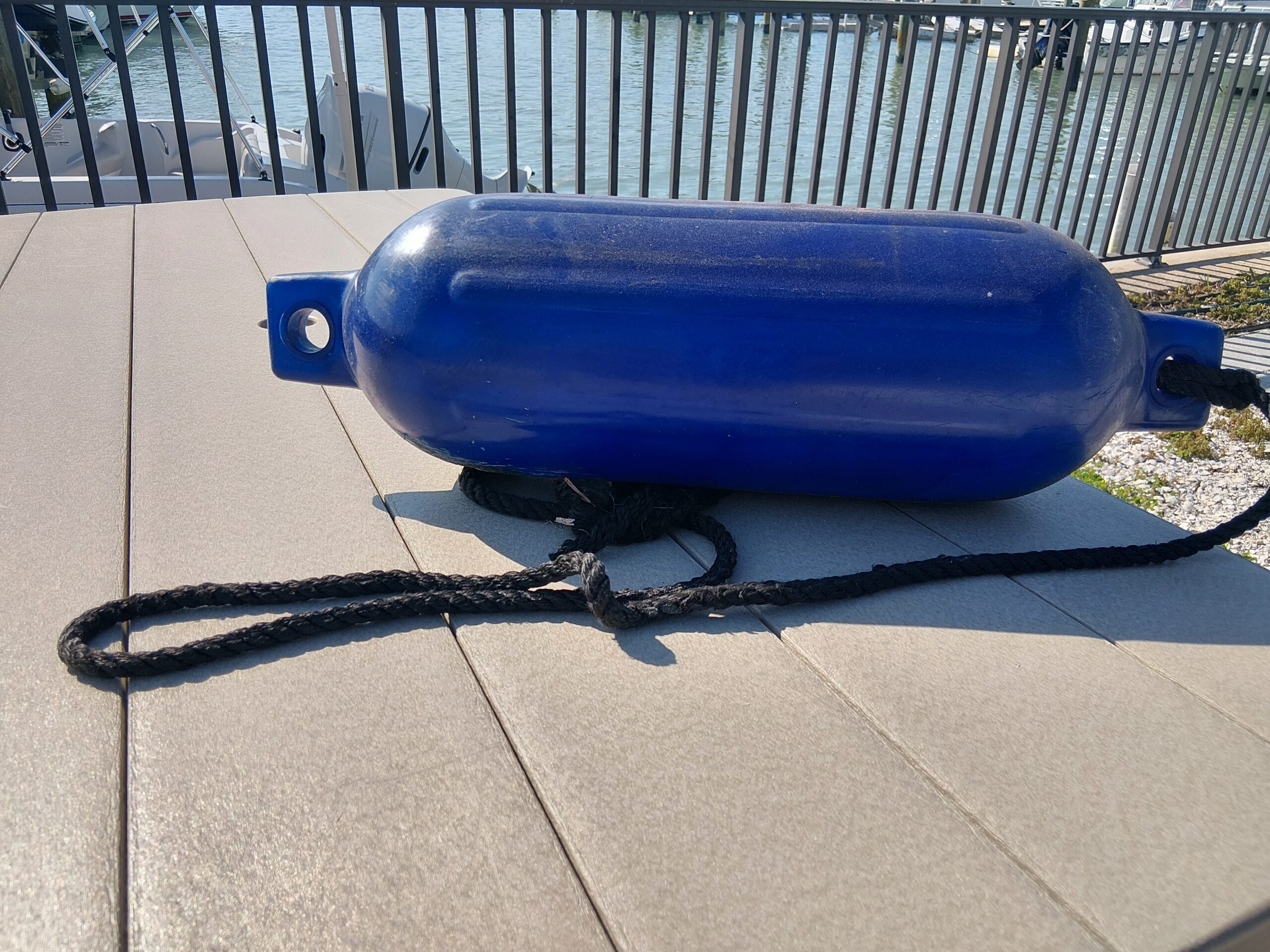
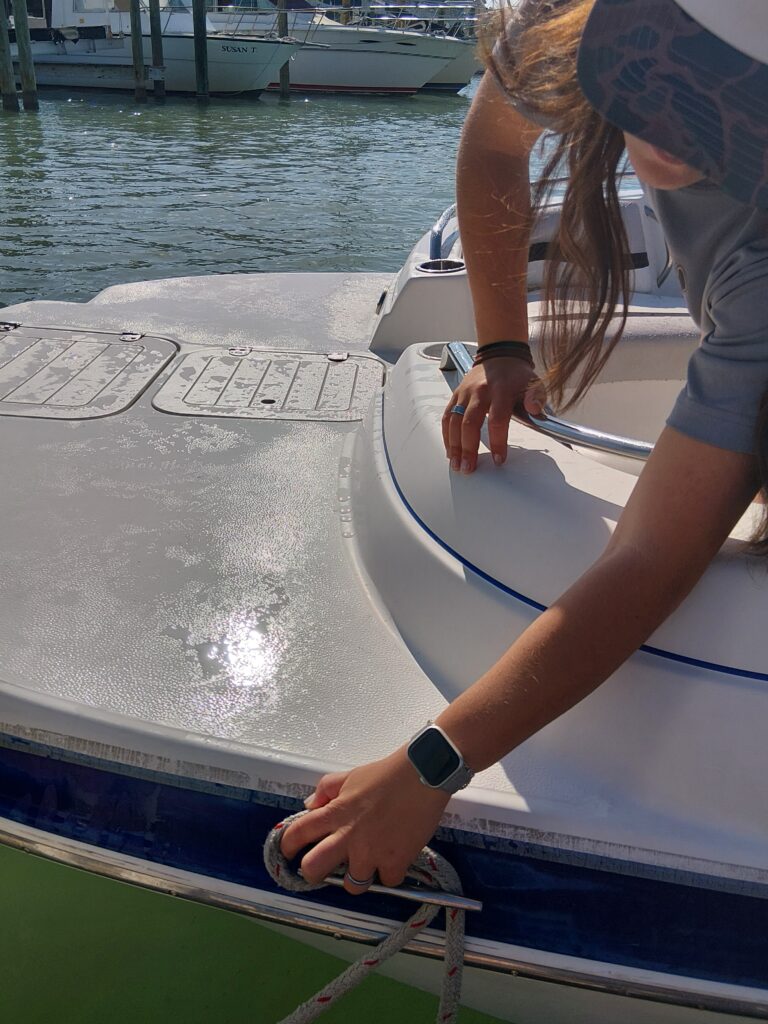
Fenders out. Lines ready. Everything staged before you start your approach.
Don’t—and I mean don’t—wait until you’re ten feet from the dock to start digging through lockers for fenders or untangling dock lines. That’s when people start scrambling around the boat, tripping over each other, and looking like they’ve never been on the water before. It’s embarrassing, and more importantly, it’s dangerous.
Get your crew squared away while you’re still a comfortable distance out. Everyone should know their job before you make your move.
Read the Conditions
You need to know what the wind and water are doing to your boat before you get close. Here’s how:
Water Movement: Look for debris floating in the water or wakes trailing off fixed objects like pilings or buoys. That’ll show you the direction and speed of the current. Pay attention—even a slow current can push you around more than you think.
Wind: Flags are the obvious tell, but honestly, most of the time you can just feel it. Which way is the breeze hitting your face? That’s your wind direction.
How Much Will It Affect You? This is where experience comes in. A boat with shallow draft and high freeboard (lots of boat sticking up out of the water) is going to get pushed around by wind way more than a deeper boat that sits low. Every boat handles differently. The only way to really learn yours is time on the water.
Work With the Conditions, Not Against Them
Here’s where a lot of people go wrong: they fight the wind and current like they’re in a battle. Throttle up, muscle the boat around, stress levels through the roof.
Stop. Let the conditions work for you.
If the wind is blowing you toward the dock? Great. Ease in and let it push you gently into place. If the current is pulling you away? Use it. Position yourself upwind or upcurrent so that if you get too close to something, you can drop into neutral and let the boat drift away safely.
Floating into a dock is fine. You don’t need to power your way in like you’re parking a car. Relax and use what nature’s giving you.
Twin Engines? You’ve Got Options
If you’re running twin engines, you’ve got a serious advantage. Leave the wheel centered and use the independent throttles to spin the boat.
One engine forward, one in reverse? The boat spins clockwise or counterclockwise depending on which throttle you’re working. It’s like having a joystick. Practice this in open water first, but once you’ve got it down, tight docking situations become way easier.
When Things Go Wrong
And they will. Here’s what NOT to do:
Don’t power up to “save it.” I’ve seen this a thousand times. A driver realizes they’re drifting toward something, panics, and guns the throttle thinking they’ll steer away. Instead, they hit it harder and faster than if they’d done nothing. Physics doesn’t care about your good intentions.
Don’t use your hands (or anyone else’s) as fenders. Seriously. I’ve watched passengers jump up and run to the bow to stick their hands out like they’re going to stop a 3,000-pound pontoon or an 8,000-pound cruiser. You’re not Superman. You’re going to get hurt. Never use body parts to fend off.
What you SHOULD do:
- Put it in neutral. You’re already at idle (because you approached at crash speed, right?). Just drop into neutral and let it bump as gently as possible.
- Use an actual fender. If you’ve got time, grab a fender and put it between the boat and whatever you’re about to kiss. That’s what they’re for.
- Stay calm. A gentle bump at idle is not the end of the world. It’s way better than the alternatives.
If You Get Pinned
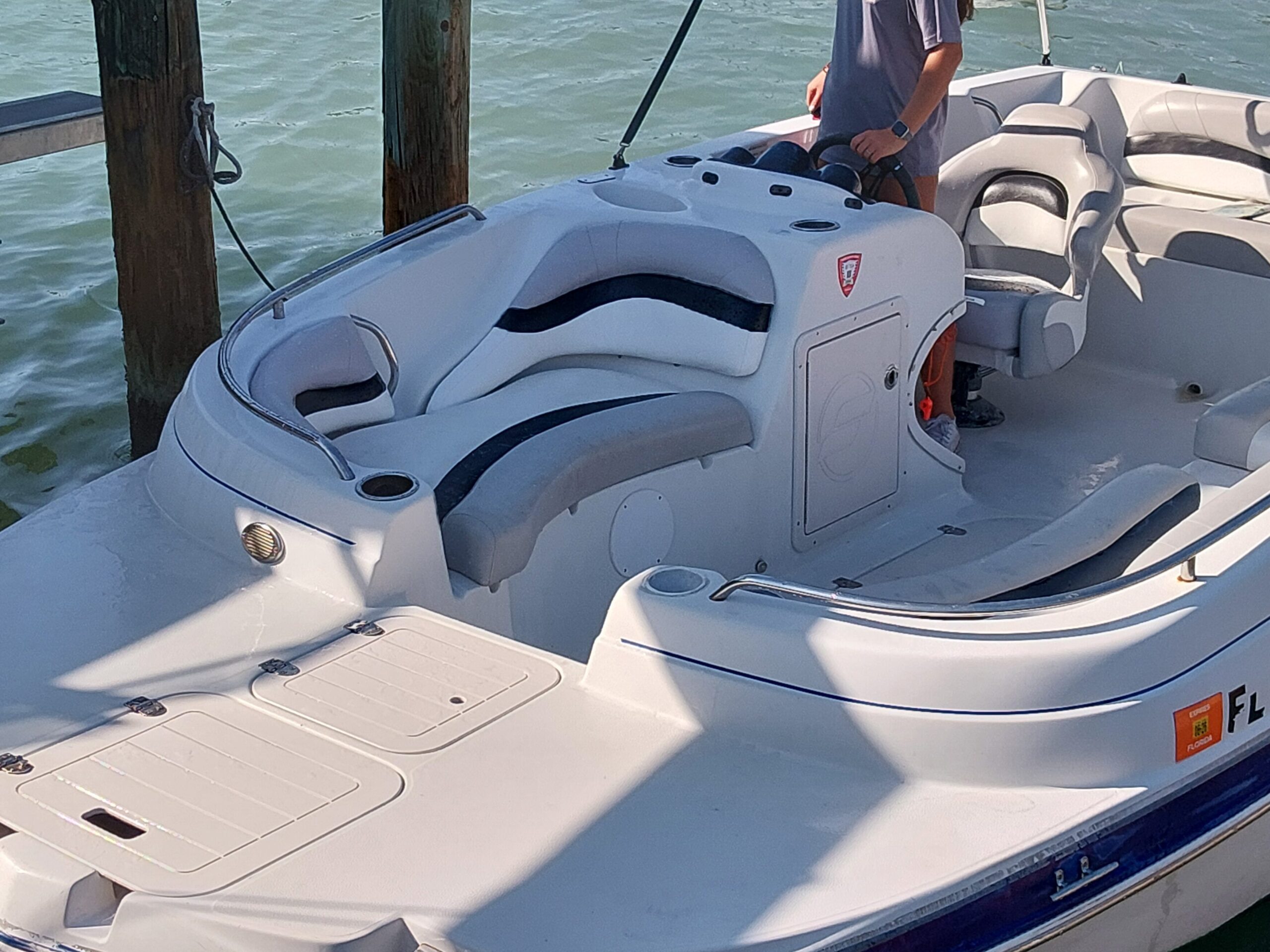
Sometimes the wind or current pushes you broadside against the dock or another boat and you’re stuck there. It happens.
Your instinct might be to go forward and try to push away. Don’t. The engine and steering are at the stern, so going forward doesn’t give you much control when you’re pinned sideways.
Instead, go into reverse. It pulls the boat away from whatever you’re stuck against, and since your point of control is at the back, you’ve got way better maneuverability to get clear.
Stop Overdoing It
The last thing I’ll say: most drivers contribute way more input than they actually need. They’re constantly adjusting, throttling, turning the wheel, second-guessing themselves.
Relax. Small corrections. Let the boat settle. Give your inputs time to work before you add more. Overdoing it is how you end up zigzagging into the dock like you’ve had too much sun.
Trust the process, trust your plan, and trust that going slow is always the right call.
The Bottom Line
Docking in wind and current isn’t about brute force or fancy maneuvers. It’s about reading the situation, having a plan, staying calm, and letting the conditions work for you instead of against you.
Approach slow. Rig early. Use your brain more than your throttle. And remember: if you’re going to bump, bump gently.
The dock’s not going anywhere. Take your time.