Float Plans
Float Plans: The Simple Step That Could Save Your Life
Look, nobody heads out thinking today’s the day something goes wrong. The forecast looks solid, the boat’s purring like a kitten, and you know exactly where you’re going. But the water’s got a mind of its own—weather changes, engines quit, stuff happens. When it does, the difference between getting found fast and… well, not getting found fast… often comes down to whether anyone knows where to look for you.
That’s what a float plan is for. It’s dead simple, takes maybe five minutes, and could be the smartest thing you do all season.
Why This Matters
Here’s a story that’ll make the point better than any lecture. A worried parent called because their son hadn’t checked in from a kayak fishing trip. The only details? He left the boat ramp that morning, and his kayak was yellow.
Yellow. That’s all we had to go on.
Local law enforcement, state police, Coast Guard, private search teams, and every recreational boater within radio range spent two hours searching. Channel 16 was jammed with people trying to help. We contacted countless yellow kayaks. None of them were the right person.
Turns out, he’d paddled into a narrow waterway too shallow for search boats to reach. Another kayaker fishing the same spot eventually came back to the ramp and told law enforcement where to find him. Oh, and he’d turned off his phone to save battery—so his parent couldn’t even call him directly.
Everyone was fine, but look at the resources that got burned because of a simple miscommunication. A proper float plan and check-in time would’ve prevented the whole thing.
Describe Your Boat Like You’re Trying to Find It in a Parking Lot
“White boat with a blue top” doesn’t help anybody. You know how many boats match that description? Way too many.
Think about what actually makes your boat stand out:
- Engine color – Not many people think to note this, but it’s visible and unique
- Bottom paint color – Especially helpful if the boat capsizes
- Colored stripes or graphics – Hull striping, custom decals, company logos
- Canvas or sail color and style – Not just “blue,” but “navy blue dodger with gray side panels”
- Hull identification numbers – The single most specific identifier
- Boat style and make – “24-foot center console” is better than “small boat”
- Planned activities – Fishing? Diving? Cruising? This narrows down likely locations
The more specific you get, the faster someone can pick your boat out of a crowd—or spot it when things have gone sideways.
What Should Be in a Float Plan?
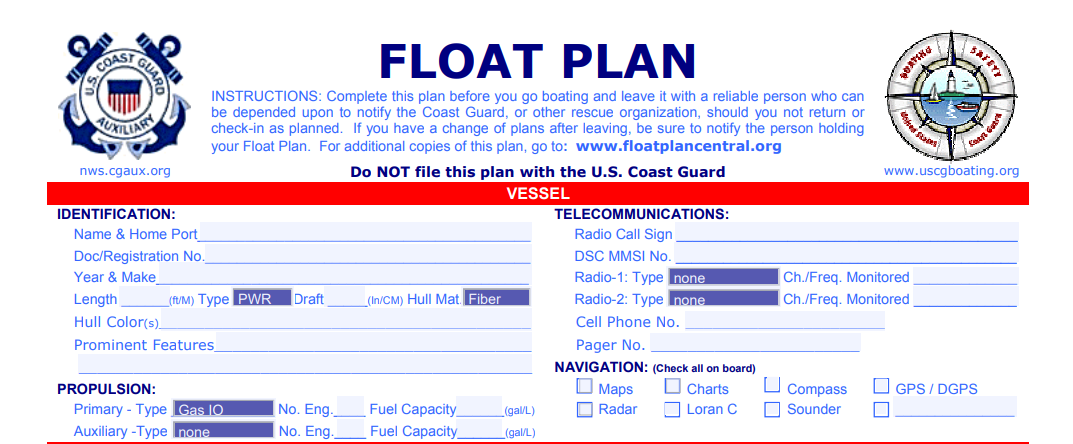
The USCG has a standard float plan form that covers all the bases. You can download it from Float Plan Central (floatplancentral.org) or use the USCG Boating Safety app on your phone. Here’s what it asks for:
Vessel Information:
- Registration number
- Make, model, length, and type
- Hull color, trim color, and prominent features
- Engine details and fuel capacity
- Radio equipment and frequencies monitored
People on Board:
- Names, ages, and contact information
- Medical conditions or special needs
Trip Details:
- Departure point and time
- Destination and route
- Expected return time
- Planned activities
Safety Equipment:
- Life jackets, flares, EPIRBs, life rafts
- Communication devices (VHF, cell, satellite)
Emergency Contacts:
- Who should be notified if you don’t return
- Local rescue authority contact info
Technology That Saves Lives
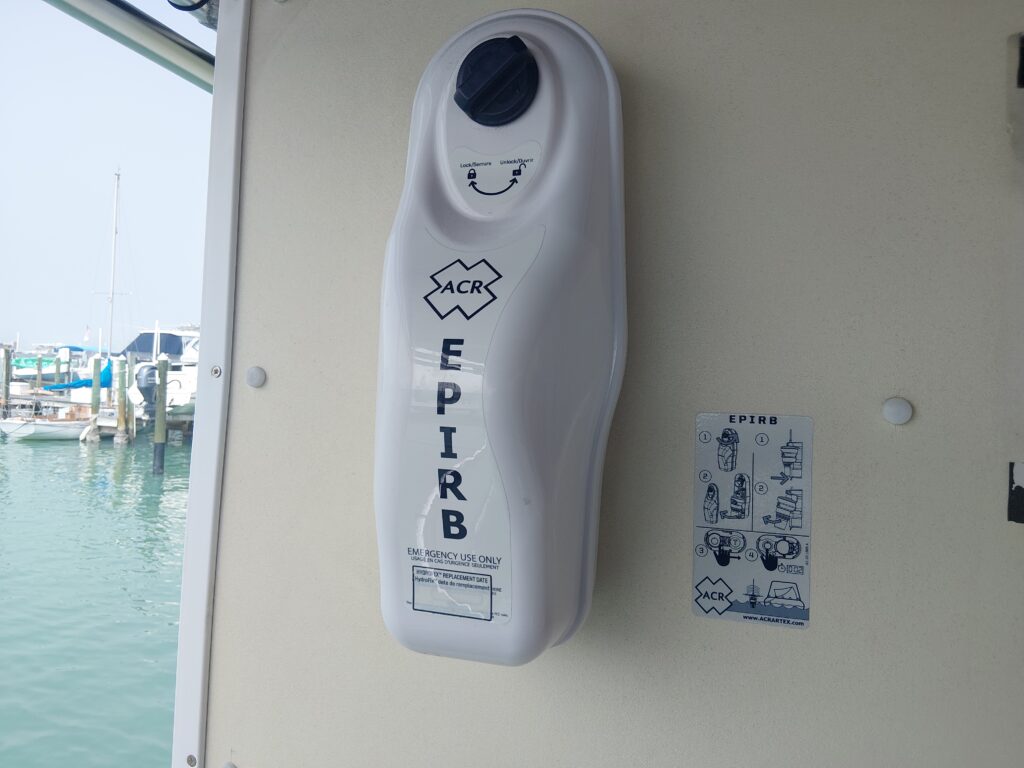
While we’re talking about being found, let’s address the best option available: EPIRBs (Emergency Position Indicating Radio Beacons) and personal satellite tracking devices. I like and use Spot’s personal location devices which can be found Here. These dramatically reduce response times for emergency services, especially when you’re outside cell phone range. When activated, they send your exact coordinates to search and rescue. No guessing, no searching—just a direct line to your location.
If you don’t have an EPIRB, at least keep a cell phone charged and dedicated for emergencies. Don’t drain it playing music, taking photos, or scrolling social media. When you need to make that call, you want battery life available.
Know How to Use Your VHF Radio
Having a VHF radio on board is great. Knowing how to use it in an emergency is essential. Learn the proper procedures for making a distress call on Channel 16:
- “Mayday, Mayday, Mayday” for life-threatening emergencies
- “Pan-Pan, Pan-Pan, Pan-Pan” for urgent situations that aren’t immediately life-threatening
- State your vessel name, position, nature of distress, number of people on board, and what assistance you need
Practice this before you need it. In a real emergency, adrenaline and panic can make you forget the basics.
Give It to Someone Who’ll Actually Use It
Quick note: don’t send your float plan to the Coast Guard. They don’t keep them on file. Instead, give it to someone you trust who’s staying on land. Pick somebody reliable—someone who’ll actually remember to check in and knows what to do if you don’t answer.
Your person needs to know:
- When you’re supposed to check in (noon? End of day? Both?)
- When to start worrying if they don’t hear from you
- Who to call if things go sideways (local rescue authorities, not 911… well, unless it’s 911)
And here’s the big one: if your plans change, tell them. Nobody wants to launch a search because you decided to stay an extra night at the sandbar and forgot to mention it.
Five Minutes Well Spent
A float plan isn’t red tape or paranoia. It’s just smart. Takes less time than topping off your fuel tank, and it means if something does go wrong, people know where to start looking and what they’re looking for.
The water doesn’t care about your plans. Make sure somebody on land does.
Resources: